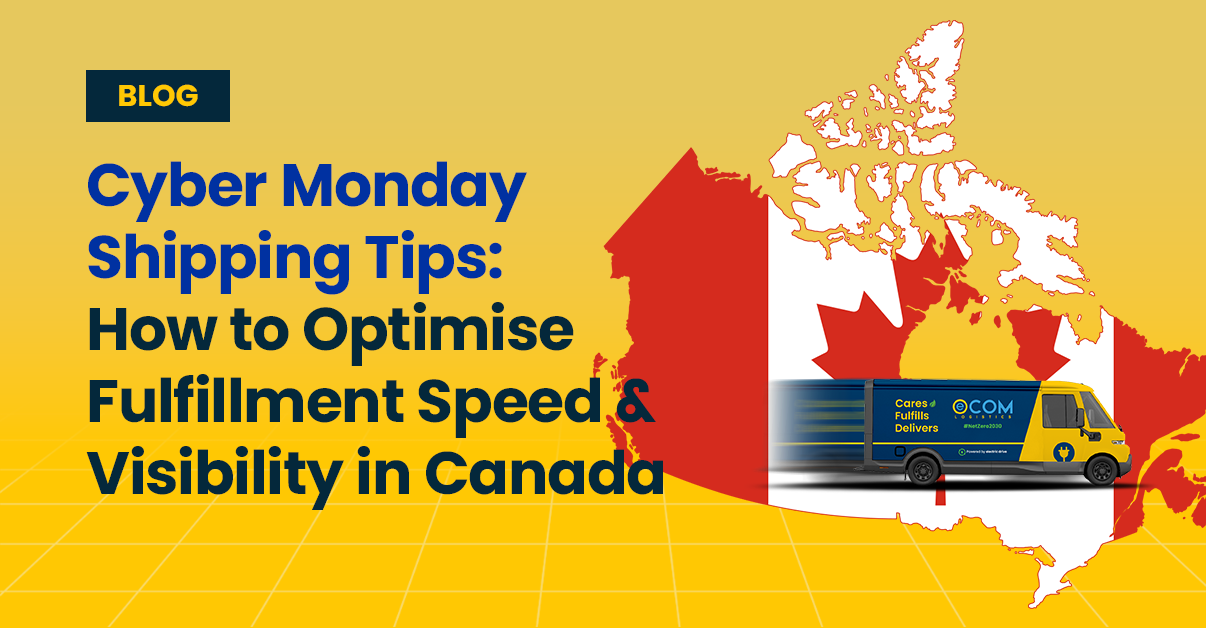

It’s happening again
Just months after a 32-day strike paralyzed Canada Post during the 2024 holiday season, another strike action has officially begun—but in a different form. On May 23, 2025, the Canadian Union of Postal Workers (CUPW) initiated a nationwide overtime ban. While Canada Post continues to operate, this legal strike action is expected to cause widespread delays, particularly in parcel processing and last-mile delivery.
Canada Post isn’t just any delivery service. It processes over 2 billion letters and 300 million parcels a year, reaching customers from downtown Toronto to the farthest northern towns. If it shuts down again, the impact will ripple across warehouses, fulfillment centres, and doorsteps nationwide.
With no agreement reached and overtime refusals now in effect, businesses that rely solely on Canada Post are at risk. The path forward is clear: diversify, prepare, and protect your delivery operations.
Let’s explore how you can keep your shipments moving—strike or no strike.

What’s happening now?
The situation has officially escalated. As of May 23, 2025, the Canadian Union of Postal Workers (CUPW) has begun legal strike action through a nationwide overtime ban. This affects both urban employees, like letter carriers and plant workers, and rural/suburban mail carriers (RSMCs), meaning Canada Post’s entire network is now operating with reduced labour capacity.
While this isn’t a full shutdown, the impact will still be felt, particularly in delays to mail processing and parcel delivery. Overtime work plays a critical role in handling high parcel volumes, especially in urban centres, so even a partial disruption like this can cause widespread slowdowns.
Canada Post has confirmed it will continue operating, but has warned customers to expect delays. The corporation also acknowledged that the nature of the strike may evolve, depending on how negotiations proceed.
At this point, two additional scenarios remain on the table:
- Rotating walkouts – CUPW could escalate to rotating strikes, with different regions affected on different days. While Canada Post would still deliver in unaffected areas, service would become unpredictable, as it did during the 2018 strike.
- Full national strike – The most severe outcome would be a complete shutdown of services. If CUPW calls a full strike, mail and parcels would no longer be accepted or delivered. Items already in the network would be held until operations resume.
For now, the overtime ban is the opening move, but it may not be the last. Businesses should act quickly to minimize risk.
What led to this?
The ongoing labor dispute between Canada Post and the Canadian Union of Postal Workers (CUPW) has been marked by a series of negotiations, government interventions, and financial challenges.
- November 15, 2024: CUPW initiated a national strike, leading to a 32-day work stoppage. The strike was suspended on December 17, 2024, following a ruling by the Canada Industrial Relations Board (CIRB), which ordered employees back to work and reinstated the existing collective agreements until May 22, 2025.
- December 2024 – April 2025: An Industrial Inquiry Commission (IIC) was established to examine the collective bargaining dispute and Canada Post’s financial situation. The IIC held hearings with both parties, but no resolution was reached.
- May 16, 2025: The IIC released a report describing Canada Post as “effectively insolvent” and recommended significant structural changes. CUPW strongly opposed these recommendations, citing concerns over job security and public postal services.
- May 19, 2025: CUPW issued a 72-hour strike notice, indicating that strike activity would commence on May 23, 2025, if no agreement was reached.
- May 21, 2025: Canada Post presented new global offers to CUPW, aiming to address key concerns such as wage increases, job security, and workplace improvements.
- May 23, 2025: With no agreement in place, CUPW initiated a nationwide overtime ban, a legal form of strike action affecting both urban and rural/suburban mail carriers. Canada Post continues to operate but warns of potential delays due to reduced labor capacity.
Despite sharp differences, both sides remained at the bargaining table, at least until this week’s overtime ban signaled a new phase in the standoff.

The risk of relying solely on Canada Post
For e-commerce businesses, leaning entirely on Canada Post isn’t just inconvenient, it’s a critical risk. When your entire shipping strategy depends on a single carrier, any disruption, even a partial one, can grind operations to a halt.
This was made painfully clear during the 2024 strike, when over 55,000 postal workers walked off the job. For 32 days, Canada Post’s entire delivery network came to a standstill. Millions of parcels were delayed, rerouted, or lost altogether. Small businesses were hit especially hard—issuing refunds, eating courier costs, or losing peak-season sales entirely. The total economic fallout? An estimated $1.6 billion in lost revenue.
Now in 2025, the cycle is repeating—this time with a nationwide overtime ban. While Canada Post remains operational, the strain on its system is already causing delays. And with no deal in sight, further escalation remains on the table.
But it’s not just labour unrest that exposes this vulnerability. Weather disruptions, network outages, and policy changes can all wreak havoc if your delivery plan lacks backup options. Even Canada Post acknowledged during last year’s standoff that merchant volume declined as businesses shifted to alternate carriers ahead of the strike.
In an e-commerce environment where customers expect fast, seamless delivery, the cost of missed expectations is real. Nearly 60% of shoppers say a positive delivery experience boosts repeat purchases. But just one bad experience can damage trust, and your brand.
Don’t put all your boxes in one truck
Over-relying on one carrier, even a trusted one, is like depending on a single supplier for a critical raw material. If that source fails, everything downstream stalls.
For e-commerce brands, shipping is the backbone of the customer experience. And in today’s unpredictable landscape, delivery resilience isn’t optional, it’s essential.
Best strategy? Carrier diversification
In today’s unpredictable landscape, where strikes, surges, and delays are part of doing business, carrier diversification has become a must-have strategy for e-commerce brands.
Simply put, it means using more than one carrier partner to deliver your orders. Instead of relying entirely on Canada Post or any single carrier, you split your shipments across multiple carriers based on factors like destination, delivery speed, or cost. For example:
- Use Carrier A for local deliveries
- Carrier B as a backup during peak season
- Carrier C for express or fragile shipments
It’s like building a flexible, resilient shipping ecosystem that adjusts as your needs shift.
Diversify NOW!
Carrier diversification isn’t just about having a backup plan, it’s a way to stay ahead of the curve. Yes, setting up accounts and integrating tools takes time, but it pays off. When strikes or slowdowns happen, your business keeps going while others are left scrambling. It’s no surprise more Canadian retailers have taken this route since the 2018 and 2024 Canada Post strikes.
Here’s your best Plan B in the time of need & beyond
With strike action already underway in the form of a nationwide overtime ban, businesses across Canada are in line to face delivery slowdowns, and hence left asking a critical question: What now?
When carrier delays threaten your reputation and customer trust, having a reliable backup is utmost essential. That’s where Ecom Standard and Ecom Express come in.
Ecom Standard:
Born from a clear gap in the market, Ecom Standard was designed to offer reliable, scalable coverage precisely when the traditional national network falters. With the current labour action putting pressure on parcel processing, Ecom Standard is all set to help Canadian businesses avoid delivery delays and disappointed customers.
Ecom Standard currently reaches:
- 90% of Ontario’s population, including key regions like Ottawa, Windsor, Kitchener-Waterloo, and Cambridge
- 60% of Quebec, with coverage across Greater Montreal and Quebec City
This expanded footprint makes Ecom Standard a leading Canada Post alternative, one that isn’t just reactive, but built for the long haul. Whether you’re delivering orders from a warehouse in Mississauga or a storefront in Laval, you’re covered.
And it’s not just about coverage. Ecom Standard brings:
- Regional-first routing strategies to avoid volume bottlenecks
- Tech-enabled visibility, including real-time status updates
- A logistics network engineered for resiliency during peak periods and service interruptions
This isn’t Plan B. It’s your primary shipping strategy during the Canada Post strike—and beyond.
Ecom Express:
While Ecom Standard gives your business reach, Ecom Express ensures speed. Focused on last-mile delivery in major Canadian cities, Ecom Express helps businesses maintain service-level commitments, even during strike-induced chaos.
Imagine promising same-day delivery during a CP strike and actually delivering it. That’s the power of Ecom Express.
Here’s how:
- Same-day and next-day delivery across major Canadian cities
- Flat-rate pricing with no surprise fuel surcharges or seasonal markups
- A growing electric vehicle fleet, aligned with sustainable delivery goals
- Real-time visibility and proof of delivery, so your customers aren’t left guessing
These features make Ecom Express a reliable shipping alternative during the Canada Post strike, especially for high-volume or time-sensitive sellers who can’t afford delays.
Ecom Express is built to keep your promises intact, while others scramble to find workarounds.

Caption: Ready to deliver—strike or no strike.
Together, they form a resilient delivery network
Ecom Standard and Ecom Express create a multi-layered logistics solution designed for today’s uncertain environment. If you’ve been asking, “How can we keep delivering on time despite Canada Post delays?”—this is your answer.
Here’s what you’ll get –
- Diversified coverage that stretches across cities and regional zones
- Speed and consistency, even in the middle of a national disruption
- Technology that gives you and your customers full visibility
- Cost control through flat pricing and fuel-free surcharges
And most importantly—resilience. When others pause operations, your deliveries continue. When your competitors issue delay notices, your customers get tracking links and packages on their doorsteps.
That’s the difference between reaction and preparation.
Build delivery resilience—because the disruption has already begun
This isn’t just a warning—it’s reality. With a nationwide overtime ban now in effect, Canada Post’s delivery capacity is already strained. For e-commerce businesses, this moment underscores a hard truth: delivery resilience isn’t a luxury—it’s a necessity.
Strikes, surges, and service slowdowns will continue to come and go. But brands that diversify their carriers and plan ahead are the ones that keep shipping, keep earning, and keep customer trust—even when the national network falters.
Now’s the time to act—not later. Because when others are posting delay notices, you could still be posting delivery confirmations.Ready to future-proof your logistics? Contact us today.
- About the Author
- Latest Posts